Scripture & Meaning
Psalm 23 Art: Meaning and How to Display It
Updated June 10, 2026 · 6 min read
Quick answer
Psalm 23 art illustrates the psalm’s central image: the Lord as a shepherd who provides, restores, and protects. The most common scenes are "green pastures" and "still waters" (verses 2–3), which signify provision and rest, and "the valley of the shadow of death" (verse 4), which signifies God’s presence in fear and grief. The most meaningful way to display a set is in verse order, so the eye travels from rest through the valley to peace.
Psalm 23 is the most beloved of the psalms and the most depicted in Christian art, because its comfort is carried entirely through pictures — pasture, water, valley, table, house. That is also why it hangs so well: each line is already an image. A Psalm 23 piece works as art even for a guest who does not know the text, and it deepens for everyone who does.
Here is what the key images mean, and which pieces in our Good Shepherd and Pastoral collections correspond to each verse.
What does each image in Psalm 23 mean?
The psalm moves through five scenes. These are the ones most often turned into art:
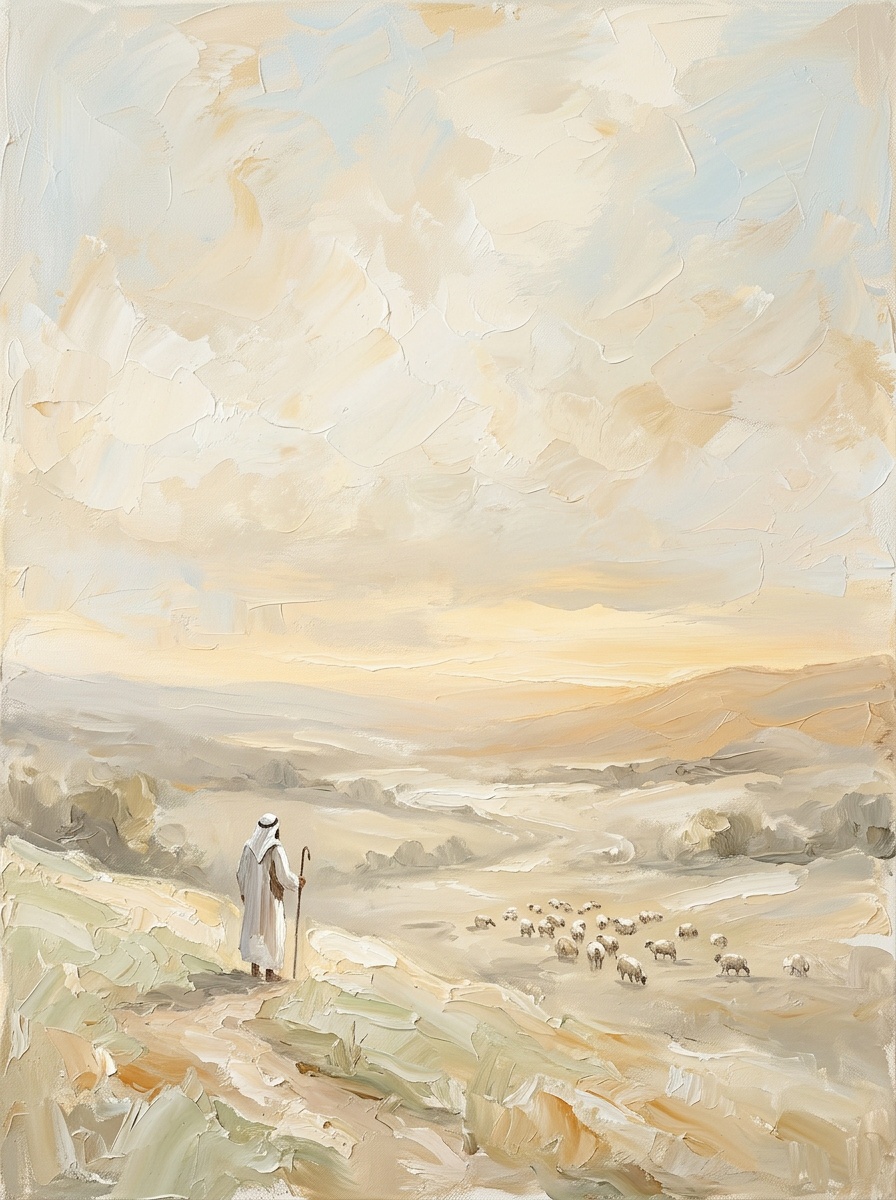
The Lord is my shepherd (v.1) — provision and belonging
The opening line frames everything that follows: to belong to the shepherd is to lack nothing. Tender Watch shows the shepherd on a hillside at dusk, the flock grazing in the valley below — a quiet image of being watched over.
View Tender Watch →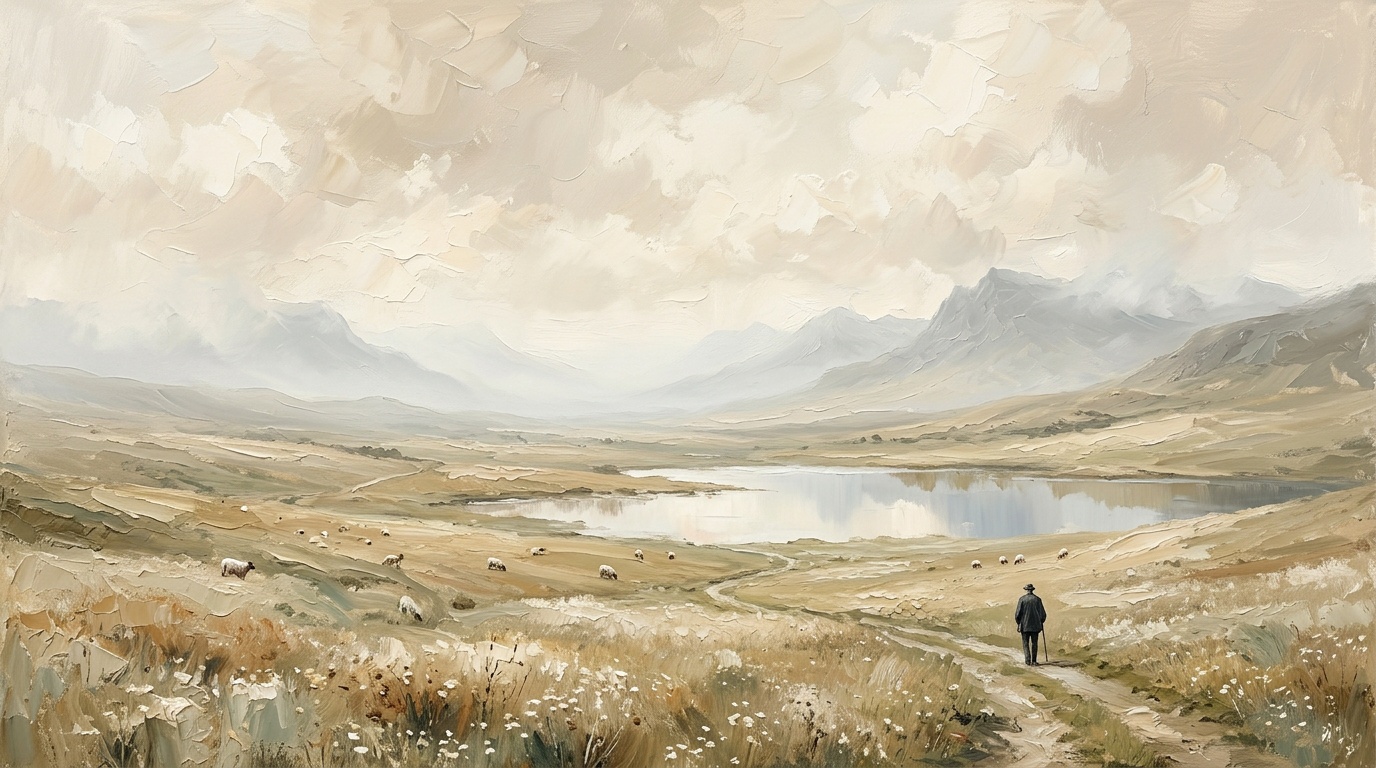
Green pastures (v.2) — rest and provision
"He makes me lie down in green pastures." The pasture is not just food but rest — the shepherd makes the sheep lie down. Green Pastures renders this as an endless meadow dotted with sheep, the most peaceful image in the psalm.
View Green Pastures →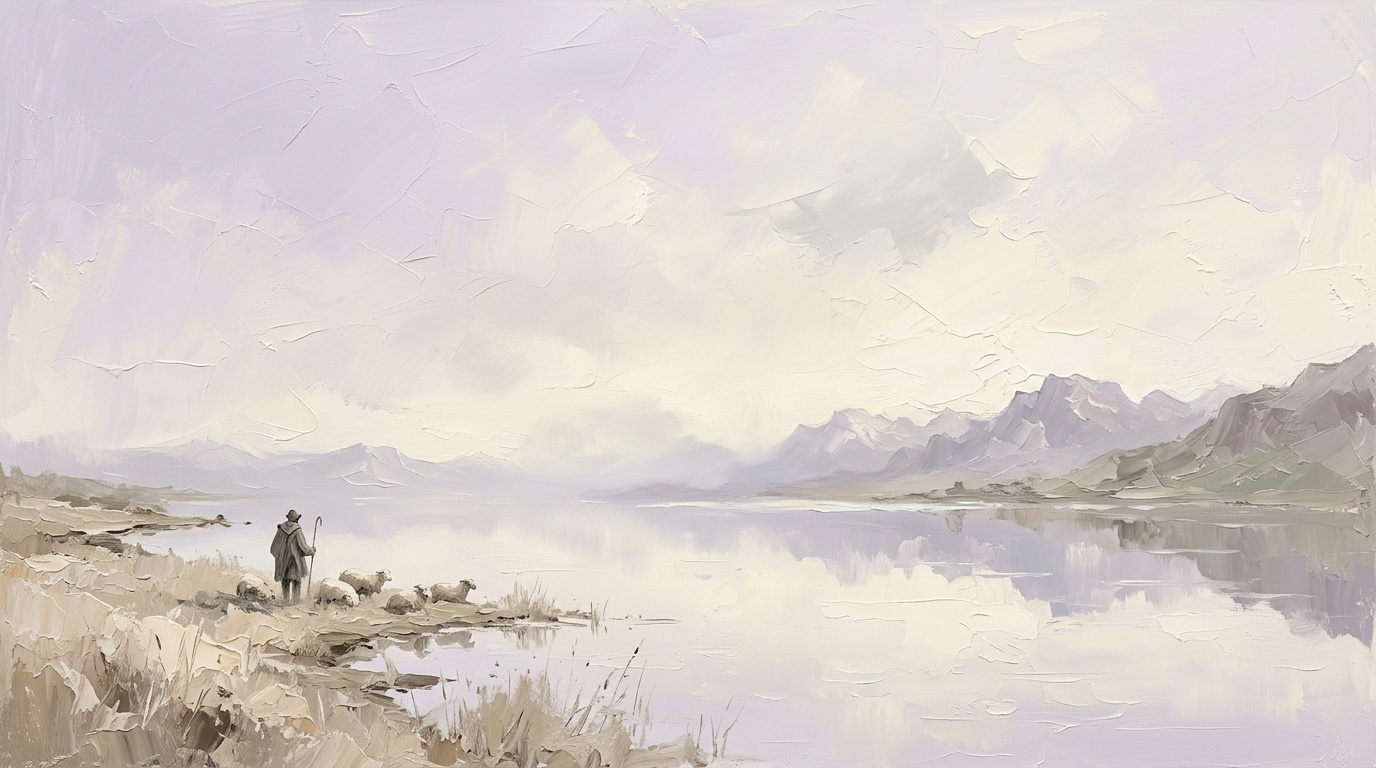
Still waters (v.2–3) — restoration
"He leads me beside still waters. He restores my soul." Sheep will not drink from fast water; the shepherd leads them to calm. Beside Still Waters places the flock at a mirror-calm lake with mountains reflected — an image of a soul being restored.
View Beside Still Waters →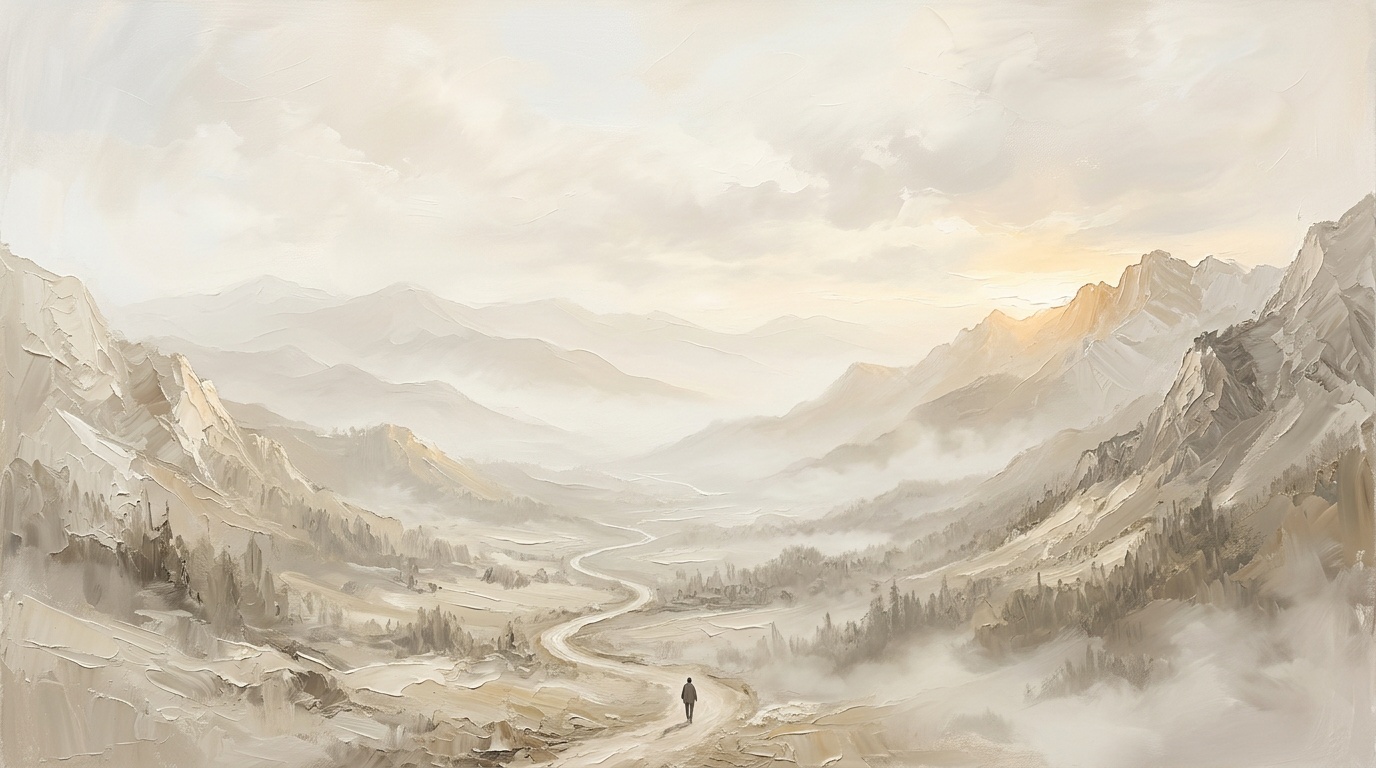
The valley of the shadow (v.4) — presence in fear
"Even though I walk through the valley of the shadow of death, I will fear no evil, for you are with me." This is the turn of the psalm. Through the Valley shows a lone figure on a winding path through a vast misty valley with light breaking above — fear and comfort in one frame. It is the piece people most often buy in seasons of grief.
View Through the Valley →
How should you display Psalm 23 art at home?
Because the psalm is a sequence, arrangement matters more than with a single piece:
- —For a set, hang the pieces in verse order — pastures, still waters, then the valley — so the eye moves through the psalm. Left-to-right in reading order reads most naturally.
- —A trio of same-size prints (for example three 11×14" framed prints) spaced 2–3" apart makes a clean gallery line along a hallway or above a console table.
- —If you want a single piece, choose by season of life: Green Pastures or Still Waters for a restful room, Through the Valley for comfort in loss.
- —These are popular as sympathy and bereavement gifts — a framed Through the Valley with the verse is a gentler gift than flowers, and it lasts.
Frequently asked questions
What do green pastures and still waters represent in Psalm 23?
Green pastures represent provision and rest — the shepherd makes the sheep lie down, not just feed. Still waters represent restoration; sheep will only drink from calm water, so the shepherd leads them to it, picturing a soul being restored to peace.
What does "the valley of the shadow of death" mean?
It refers to the darkest, most fearful passages of life, including grief and dying. The point of verse 4 is not the valley but the company through it: "I will fear no evil, for you are with me." It is why Psalm 23 is read at funerals and in times of fear.
How do you arrange a set of Psalm 23 prints?
Hang them in verse order — green pastures, then still waters, then the valley — reading left to right, so the viewer moves through the psalm. Same-size framed prints spaced 2–3 inches apart give the cleanest gallery line.